Q&A: An interview with Rebecca Mohan-Gonzales
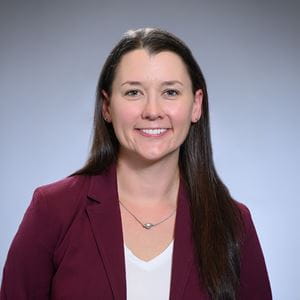 Director of PCG Talent Acquisition Rebecca Mohan-Gonzales is at the epicenter of the firm’s branch recruiting efforts and is also a Valor operations chair. She shares with us the state of veteran recruitment.
Q: Before we get into talking shop, what has inspired you to take up veterans’ cause throughout your career?
I am not a veteran, but I come from a family of veterans. My grandfather was stationed in Hawaii during the Second World War, and three uncles also served. I saw how the transition from the service to civilian life is a challenge, and harder for some. “It takes a village,” and by helping veterans and their families with employment I thought I could do my part.
[Editor’s note: Prior to joining Raymond James in 2019, Rebecca received a Governor’s Citation by the State of Maryland for “Outstanding Commitment to Veterans” during Operation Hire in 2014.]
Q: In recent years Raymond James has made progress in creating a veteran talent pipeline. What have been some of the key developments?
We work with the local Chambers of Commerce who facilitate the DoD’s “Hiring our Heroes” program. Tampa Bay, being an important base for special forces operations, has one of the largest programs in the country. Through it, we offer fellowships to soon-to-separate military personnel. It’s been a growing pipeline for us.
If local branch leaders want to facilitate a fellowship for someone they know and their local Chamber isn’t as proactive as the one at the home office, they can get in touch with us and we can engage with Hiring our Heroes and their Chamber.
Referrals
We’ve also made some fundamental improvements to recruiting. Military resumes can be opaque to civilians. We’ve worked with the Veteran Institute to certify every recruiter so they can read an MOS and equate it to a civilian job and understand the scale of leadership that each rank represents.
Another benefit we’ve created is in partnership with Norwich University, making an MBA very affordable for advisors by combining the GI Bill with other funding sources and support from the firm. We’ve seen good interest in that program and expect it to grow.
And Valor’s partnership with VFAN has been another strong development. As an example, my counterpart in VFAN, Austin Storck, came through Hiring our Heroes and has written a playbook for veterans coming into the industry.
Veteran Financial Advisor Playbook
Search VFAN Playbook on RJnet
Q: What about an advising career do you think appeals to veterans?
First, it’s a noble profession. People join the service to serve. Advising is another way of doing that, setting them up to handle emergencies or prepare for retirement – it’s another way to help protect people.
It’s also self-motivated. It can be a satisfying career for people who are not daunted by the opportunity to do something that’s as rewarding as it is challenging.
Q: What challenges to veteran recruiting do you see?
There is the image of a Wall Street stereotype – the expensive suit, the pocket square – that keeps some veterans from picturing themselves in the career. We work to show them that advisors are a reflection of their communities and the people they support. Advisor veterans through VFAN volunteer to be part of our recruitment process as peers, meeting with prospective applicants. That’s invaluable at shaking off the stereotypes.
We’re always looking for volunteers – it doesn’t have to be a major commitment. Just a conversation between peers can have an impact.
The larger issue to recruiting isn’t unique to our industry. For many veterans, they’ve spent a career with a clear chain of command, mission-oriented expertise and defined goals. In advising, there’s none of that – it’s like the Wild West – you build your business, you find your clients. You decide when you get out of bed. We’ve found the Advisor Mastery Program helps with that transition, setting up some guardrails and goals, providing a discipline and a routine, and one-on-one coaching. The results have been good. As we see VFAN grow, I think we’ll see this support system becoming even more robust.
Q: Can you run us through the experience of a prospect who is looking at a looming date of separation?
Everyone’s path is different. Sometimes a name will come through a VFAN referral – those emails come to my team – and we’ll follow up. Some branch leaders stay closer to the process from start to finish. We’ve had one recent applicant who came through Hiring our Heroes, and within one month of separating was licensed and practicing as part of the Advisor Mastery Program.
Not everyone is going to be the right fit for the career, and vice versa, but we handle every referral with a personal touch and an understanding that the process is going to be different for everyone. That’s how we make it personal.
Q: Your team has expanded into branch professional hiring, and you’ve dovetailed this into a military spouse program. Can you share the details of that?
Companies have traditionally been hesitant to hire military spouses because they tend to move every few years. COVID changed a lot of expectations about remote work, which has been good for military spouses. Combined with our STEER, DRIVE and ACCELERATE training programs, we’ve been able to show advising teams that they can hire a client service associate or registered service associate regardless of geography. The Admin Extension program, which is a team of remote client service associates who can come into a practice on demand, is another place military spouses have found opportunity.
Then there are opportunities for military spouses to go into the Advisor Mastery Program.
And similar to the program for servicemembers, Hiring our Heroes has a program for military spouses.
Q: What’s next for veteran recruiting?
We’re seeing strong demand, and in time that demand may grow where it makes sense to have a dedicated military recruitment role. I’d love to see that. In the meantime, VFAN and Valor are helping us grow, a volunteer-led effort that is helping us meet our personal commitment to the veteran community and supporting the goals of advisors and Raymond James.
If you’re an advisor who meets a veteran looking to their next chapter, I encourage them to join the Raymond James career opportunities mailing list. It’ll identify jobs within disciplines at one or more locations. Maybe advising isn’t what they see for their future, but asset management, capital markets, banking – there’s a lot of opportunity at Raymond James.
Follow along on social media with #RJVFAN